Metal vs Nylon Pop Filter: Durability, Clarity and Plosive Control Compared
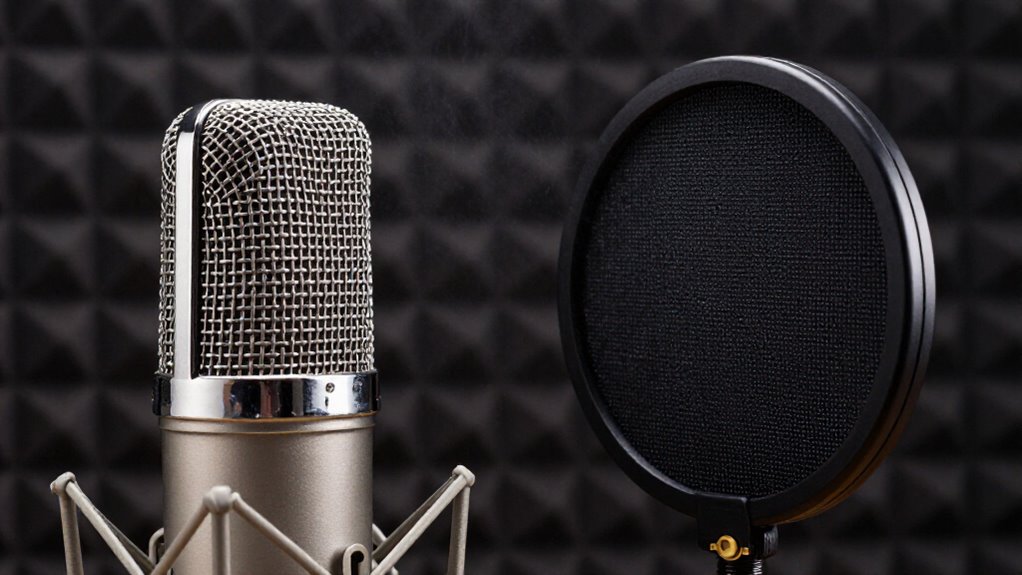
Choose metal when you need a rigid, moisture-resistant screen that wipes clean and withstands frequent use; choose nylon when cost matters and you record occasionally.
Either can control P and B bursts, but weave density, perforation pattern, open area, distance, and alignment determine results. Neither guarantees clearer highs: nylon can soften them, while metal can introduce reflections or whistles.
Test matched takes at your working distance, then compare fit, airflow coverage, and tonal change below.
Metal Screen vs. Nylon Mesh
Metal and nylon pop filters control plosives through different airflow strategies: nylon uses one or two layers of woven fabric to diffuse bursts of breath, while a metal screen’s rigid perforations redirect and disperse that airflow.
You should judge results by construction, geometry, placement, and microphone distance rather than material alone. Use a repeatable spoken test and matched monitoring levels.
| Factor | Nylon mesh | Metal screen |
|---|---|---|
| Maintenance | Can stretch or tear | Retains shape; wipe/rinse if approved |
| Acoustic effect | May soften upper frequencies | Reflections or resonance may alter sound |
| Verification | Record identical phrase | Keep mic position unchanged |
Both can suppress P and B bursts, but don’t assume either produces inherently clearer audio. Evaluate each filter at the same position, then listen for plosive reduction and tonal change.
Perforated Metal vs Woven Nylon
Perforated metal and woven nylon pop filters manage plosive energy differently: nylon diffuses airflow through fabric layers, while a rigid metal screen redirects and disperses it through its perforations. You should evaluate construction variables rather than treating material as decisive. Fabric weave density, layer count, perforation diameter, open-area ratio, and capsule distance alter airflow handling.
Nylon needs gentle cleaning: fibers can stretch, retain debris, or tear with repeated handling during routine use. Its lower initial price suits occasional or budget-focused setups. Metal retains consistent geometry over time, so you can inspect blocked holes and clean it quickly. For frequent use, its rigidity may reduce replacements and preserve predictable spacing. Mount either filter securely and inspect it regularly; deformation, contamination, or poor positioning compromises function.
Plosive Attenuation and Vocal Transparency
Material durability and cleaning matter, but plosive control ultimately depends on how a filter manages each performer’s airflow without audibly altering the vocal signal. Both nylon mesh and perforated metal filters can reduce bursts from “P” and “B” sounds, yet construction determines the result. Nylon layers diffuse and resist breath, whereas rigid metal screens redirect air through perforations.
Neither mechanism inherently preserves more high-frequency detail: nylon may soften treble, but individual designs require testing. Evaluate each filter with the same microphone, performer, phrase, and gain. Record matched takes, then level-match playback and assess residual low-frequency plosive energy alongside changes in consonant definition, air, and vocal brightness. Use spectral inspection to corroborate what your matched-level listening reveals during critical vocal passages in the mix.
Setup Distance and Alignment
Position the pop filter a few inches in front of the microphone capsule so it intercepts the initial air burst while leaving enough space for the redirected airflow to disperse before reaching the diaphragm.
Align the screen with the direct path between your mouth and the capsule, particularly during close-miked delivery. At a two to four inch mouth-to-mic working distance, plosive energy has minimal time to spread, so full path coverage matters. Maintain a repeatable speaking position rather than moving toward the filter on emphatic words. You can angle the microphone off-axis to send breath away from the diaphragm, but verify the filter remains across the airflow path. Record a test using P and B sounds, repeating the phrase and position to assess results.
Mic Clearance and Stand Fit
Once the screen covers the mouth-to-capsule path, set its clearance so it diffuses plosives without crowding the microphone. Leave enough space to prevent the frame or mesh from interfering with capsule access, while keeping the screen directly in the airflow path. Use a gooseneck that bends precisely yet resists sagging; a flexible but weak arm can shift during a session. Confirm the clamp matches your stand’s diameter and remains locked under the filter’s weight, since low-cost hardware may slip over time.
If you use interchangeable inserts, swap materials without disturbing microphone placement or rebuilding the mount. Then record a short phrase emphasizing “P” and “B” sounds. Listen for stable plosive control and verify that the screen hasn’t migrated relative to the capsule during delivery.
Washability Versus Replacement Cost
Cleaning demands and replacement risk often separate metal and nylon pop filters over long-term use. You can usually rinse a metal screen in the sink, which makes routine moisture removal straightforward. Avoid abrasives and harsh chemicals, and allow the filter to dry completely before recording.
Nylon mesh requires gentler handling: accumulated saliva and breath moisture can be harder to remove, while aggressive cleaning may stretch its weave. Follow the manufacturer’s instructions for either design. A nylon filter costs less initially, but tears or lost tension can force replacement and raise lifetime expense. You pay more upfront for metal, yet its resistance to sagging can reduce replacements. Your total cost ultimately depends on usage, care, and replacement availability for the model you choose over time.
Metal Screen Whistling Risk
Why can a metal pop filter whistle instead of simply diffusing plosives? A solid screen with limited openings can concentrate turbulent airflow, creating rushing, hissing, or whistling during forceful consonants. However, metal itself isn’t the deciding factor. Risk follows the screen’s perforation pattern, total open area, shape, and placement relative to your mouth and microphone.
Position the filter across the direct airflow path, but leave a gap before the microphone so pressure disperses. Then record strong “P” and “B” sounds and listen specifically for narrow-band whistles. When comparing filters, use the same microphone, performer, phrase, approximate position, and matched monitoring levels. This isolates the screen design rather than changing variables.
Also test silicone gel designs individually: their limited openings can make airflow noise likely.
Humidity Resistance and Odor Retention
You’ll find that metal screens resist breath moisture and rinse clean easily, limiting residue that can produce odors. Nylon mesh can retain moisture and odor more readily, and its fibers may stretch, tear, or degrade with repeated cleaning. Follow the manufacturer’s care instructions and fully dry either filter before reuse.
Moisture Handling Differences
Metal pop filters handle humidity and saliva exposure better because their nonporous surfaces resist moisture absorption and rinse clean more readily. You can remove surface residue from a metal screen with a sink rinse, provided you follow the manufacturer’s care instructions. Nylon mesh retains more moisture within its fibers and can become less stable after repeated wet exposure and handling.
- Inspect nylon tension after cleaning; stretching can alter its spacing and plosive performance.
- Use only material-appropriate cleaning methods, since aggressive scrubbing can damage fine mesh.
- Allow either filter to dry completely before mounting it again.
- Replace nylon when wear persists, rather than relying on cleaning to restore its original structure.
This routine limits moisture-related degradation and keeps your recording setup mechanically consistent over time.
Odor Buildup Risk
Odor buildup on a pop filter usually starts when saliva and breath moisture leave residue on the screen or mesh. Both materials can develop odors if you allow that residue to accumulate. Metal screens typically resist moisture and can generally be rinsed in a sink, so you can remove odor-causing deposits efficiently. However, design-specific coatings, frames, and adhesives may limit rinsing, so check the manufacturer’s care guidance first.
Nylon mesh can hold residue more persistently within its fibers and is harder to clean thoroughly. If washing is permitted, follow the maker’s instructions and let it dry completely; trapped moisture can prolong odor retention. Clean either filter regularly. Replace nylon mesh when it’s damaged or remains difficult to clean. This prevents persistent odors near microphones.
Podcast Booths vs Home Studios
In a controlled podcast booth, you need a stable, easy-clean filter that maintains consistent plosive control across frequent close-mic sessions. In a home studio, assess room noise, budget, and sightlines: nylon often provides effective low-cost protection, while metal may improve script visibility and durability. For either environment, position the filter with a microphone gap and verify its performance using matched-level “P” and “B” tests.
Controlled Booth Vocal Demands
Because controlled podcast booths encourage close-mic speech and higher preamp gain, test each pop filter at your actual working distance: P and B bursts can become conspicuous even with normal conversational delivery. Assess mounting stability across repeated takes, since slight movement changes the air path and invalidates comparisons.
- Use one speaker, microphone, phrase, and placement for both filters.
- Match playback levels, then identify plosive attenuation and any tonal shift.
- Confirm the clamp and gooseneck remain fixed while you change posture.
- Choose nylon for economical routine speech; choose rigid metal when approved rinsing supports your maintenance workflow.
A stable assembly preserves a consistent mouth-to-filter gap, which matters when you record many episodes. Don’t assume a filter’s material alone predicts performance; measured results determine suitability reliably.
Home Studio Noise Variables
Although a podcast booth may limit outside sound more effectively than a typical home studio, both spaces can add room noise and reflections that complicate pop-filter comparisons. To isolate the filter’s effect, record each trial in the same room with the same microphone, performer, phrase, gain, and approximate position.
At a 2–4-inch working distance, P and B bursts can drive low-frequency thumps, particularly when high preamp gain magnifies them. Place the filter a few inches ahead of the capsule and directly across the airflow path. Use plosive-heavy phrases, match playback levels, and assess thumps, tonal shifts, and handling noise. Repeat after altering filter placement. Because mesh, metal, and foam change airflow and response differently, judge results in your actual space, not material labels alone.
Filter Choices By Environment
Choose the filter for the way your room and workflow operate, not for its material alone. In a treated podcast booth, frequent use favors a rigid metal screen: you can wipe it quickly, and it resists stretching and tears with proper care.
- Use metal when turnaround, sanitation, and mount stability matter.
- Choose a basic nylon model, such as the Sterling Audio STPF2, when your home studio records occasionally and budget limits upgrades.
- Test forceful “P” and “B” lines at your mic position; design and placement, not material alone, determine plosive reduction.
- For close-mic speech, place the filter a few inches before the microphone, fully across the airflow path, with a secure mount.
If you read scripts, compare screen visibility; construction controls your note visibility.
Rap Vocals Favor Metal
Rap vocals often benefit from a rigid metal pop filter because forceful “P” and “B” consonants produce concentrated air bursts that can create low-frequency thumps in close-mic, high-gain takes. A perforated model, such as the 6-inch Stedman Proscreen XL, redirects and disperses this airflow without flexing, so you get repeatable attenuation across aggressive passes. Its wider screen also preserves coverage when you shift slightly off axis during a take.
Unlike nylon, metal can suppress plosives while retaining the fast transients and consonant definition that support intelligibility and rhythmic attack. Place the filter several inches ahead of the microphone, then test it against your actual volume, distance, and delivery. Metal doesn’t mask weak technique: crowding the capsule or firing directly into it can still overload.
Conclusion
You’ll get the most durable, humidity-resistant option from a perforated metal screen, which maintains consistent spacing, resists odor, and generally preserves vocal detail while reducing plosives. You should position either filter a few inches from the microphone and align it with your airflow. Choose nylon when you need softer, broader diffusion and lower cost, but replace it as it stretches. For rap or demanding booth work, metal’s stability usually delivers the more repeatable result overall.